
Often, by the time you get to the proofreading stage, you have engaged with a piece of writing dozens of times. The writer and the editor have passed a digital file back and forth through the idea stage, the revisions, the copyedit. You, the writer, have probably used some digital tools: track changes, spell check, comments, thesaurus, possibly one of the many AI assistants. All of this tinkering can mean that by the time you get to the proofreading stage, you cannot take the text in with fresh eyes anymore.
Time to go analog, sharpen your red pencil, and print out a hard copy. Take a few hours or a few days break from the text, find a different physical space if you can, and pull out those inky pages. Guaranteed, small corrections will jump out that you would not have seen on your screen: odd spacing, a font or formatting issue, a sentence fragment, a homonym that spellcheck miscorrected, etc.
I dropped my son off at the University of British Columbia recently, I read the plaque in the commons area. Check out the plaque, and tell me if you spot any errors.
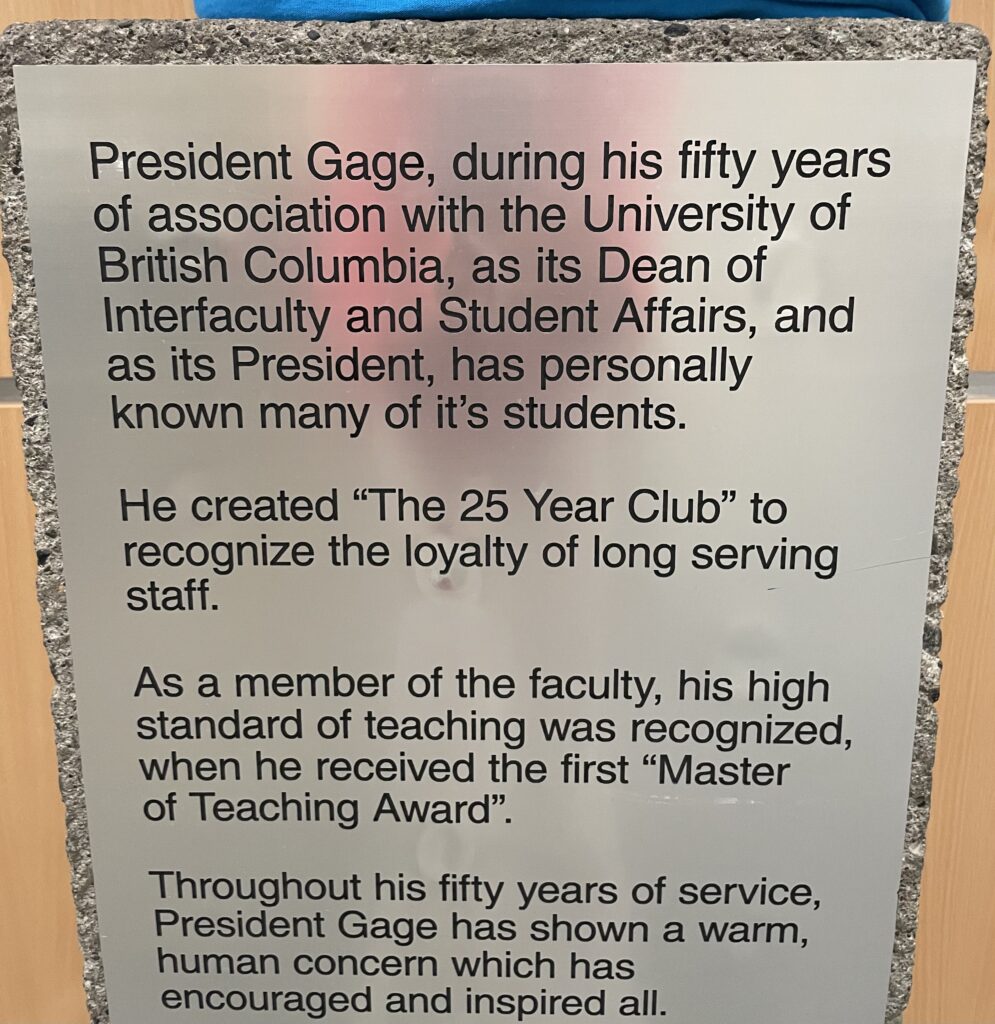
If you don’t spot a few mistakes, please go back and review my tips on contractions and on compounds. I don’t have a post on period placement yet, but North American practice places the period inside quotation marks.
Making that little mark in red pencil feels tangible and satisfying and allows you to engage with your text in a tactile way. Reading on paper also forces you to slow down and take in each word. Maybe even trace a pencil underneath every line, or read the text out loud to your canine, feline, or human friend.
Cover photo credit Jose Miguel
Leave a Reply